Product Designer
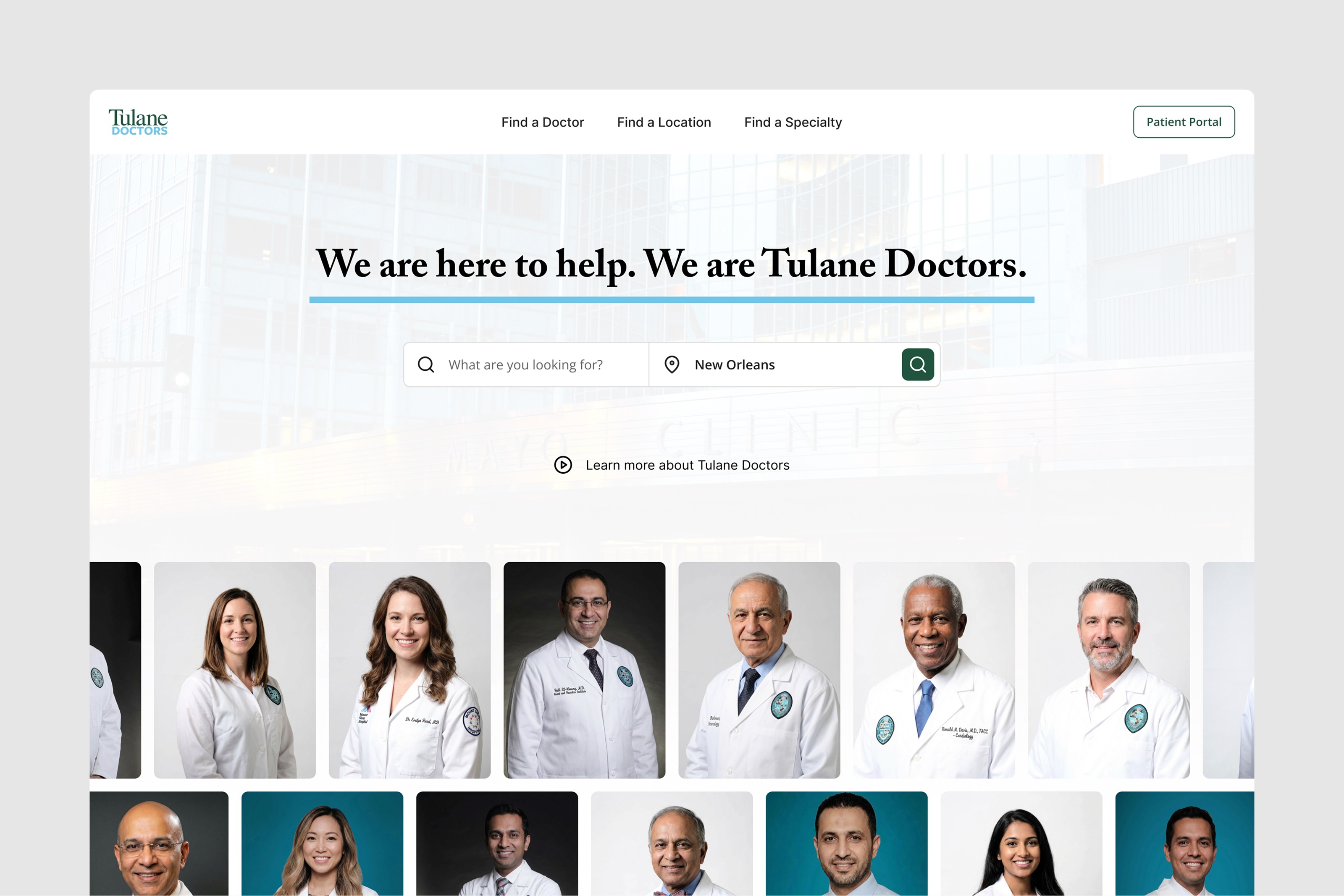
The Tulane Doctors website was built to help patients find and schedule care. In practice, seeing a specialist felt harder than it should. Visitors arrived with simple questions: Who treats my symptoms? Is this doctor right for me? How do I book? Instead of clear answers, they encountered academic language, fragmented department sites, inconsistent physician pages, and no online scheduling.
The underlying issue was structural. More than twenty departments operated independently, each controlling its own content and physician presentation. There was no shared standard for profiles, taxonomy, or navigation. Any change required alignment across department chairs, clinics, and technical systems with competing priorities. The website reflected internal hierarchy rather than patient behaviour.

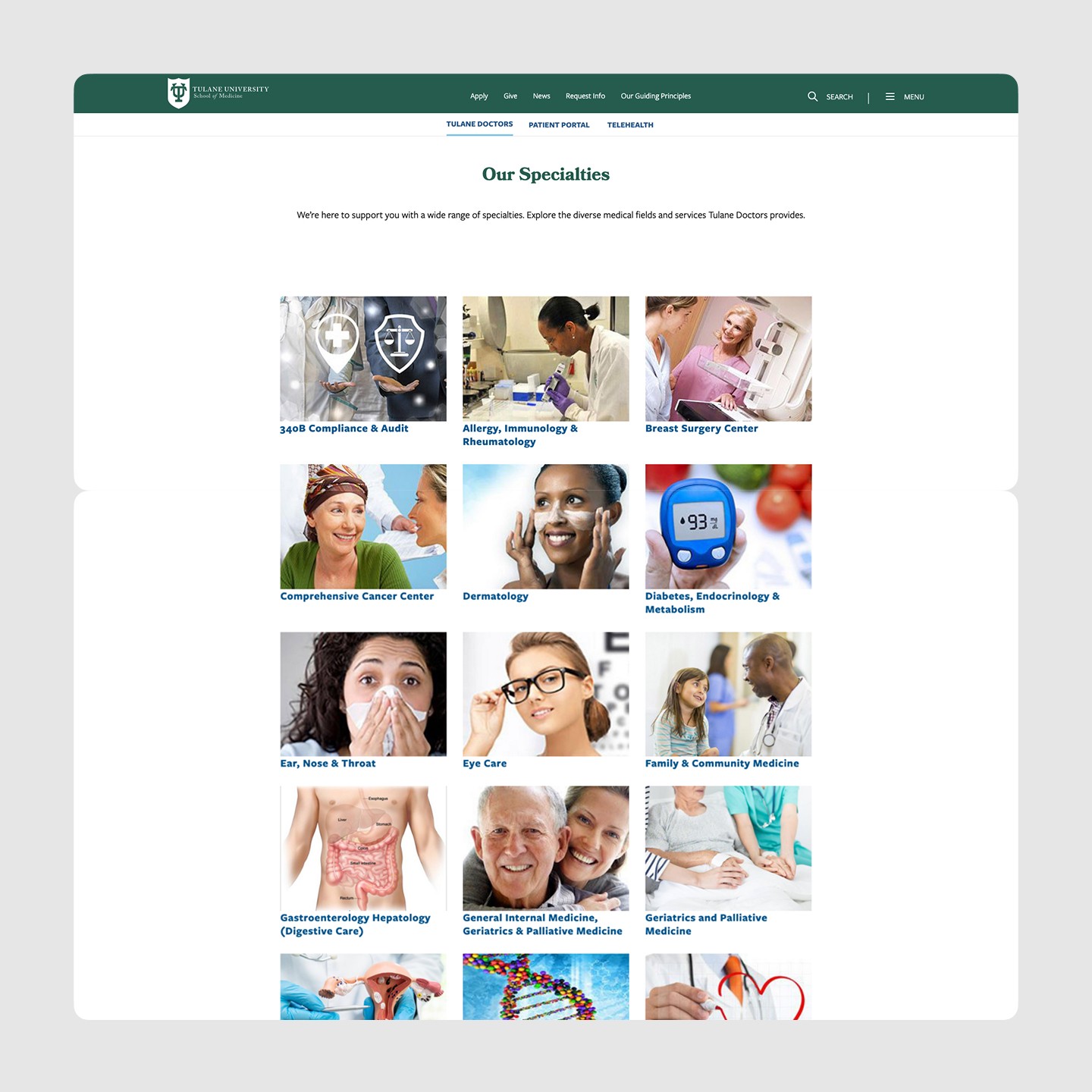
I spoke with stakeholders across clinical, operational, and marketing teams to understand goals, constraints, and system limitations. In parallel, I conducted patient interviews to map how people actually search for care. Patients expected clarity and speed. Clinics were managing staffing gaps, referral bottlenecks, and disconnected systems.
Four principles shaped the direction:
Respect clinic capacity. Online scheduling was desirable, but clinics were not operationally prepared. Launching it would have increased demand without solving staffing or referral constraints.
Prioritise discoverability. Analytics and interviews showed early drop-offs. Improving navigation, search logic, and profile consistency offered the highest leverage.
Align with patient behaviour. Patients search by symptom, insurance, and location, not department. Taxonomy and navigation needed to reflect how decisions are made.
Standardise physician presentation. Fragmented profiles undermined trust. A shared structure was required to reduce variation and clarify physician-to-clinic relationships.
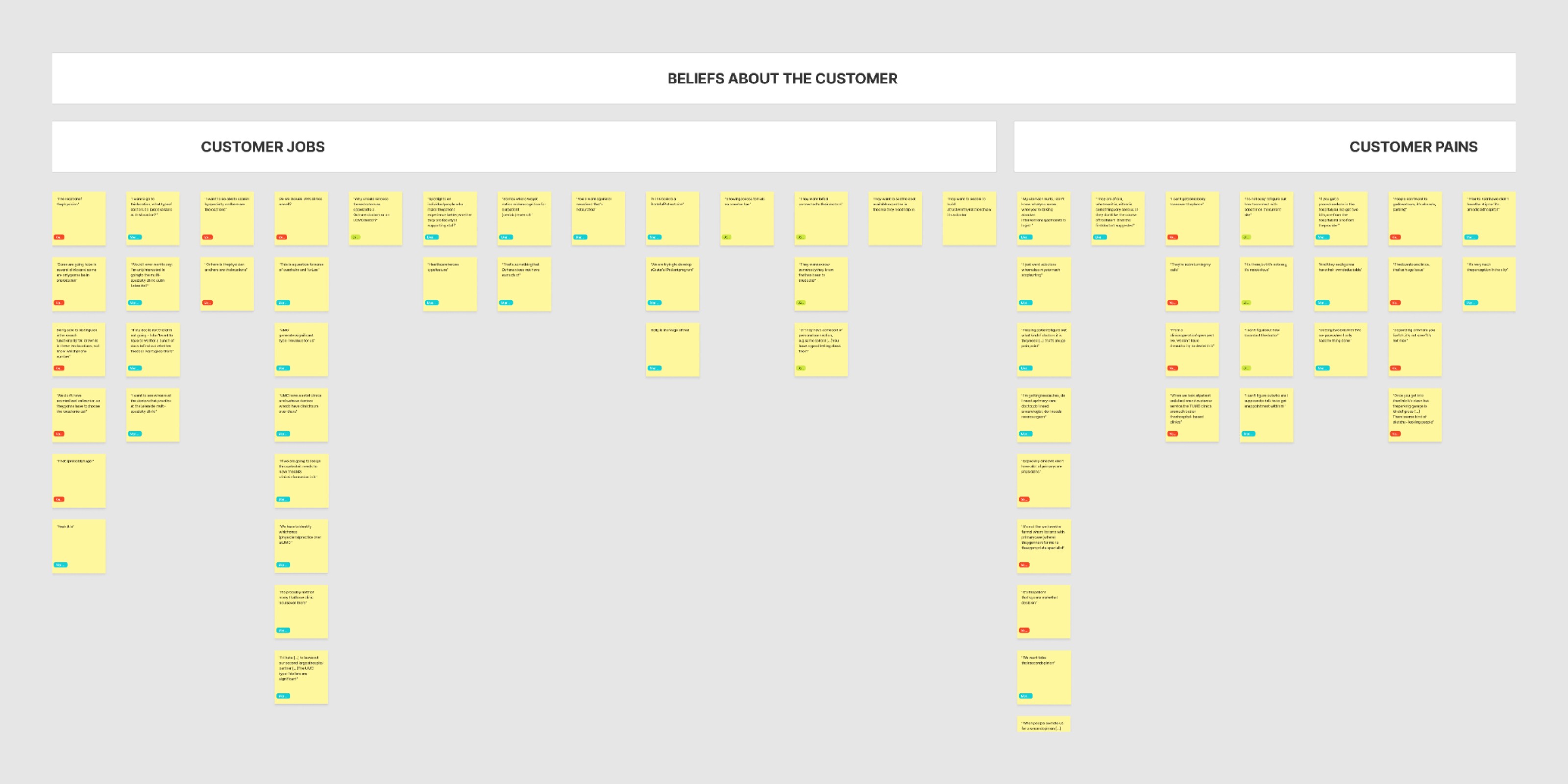
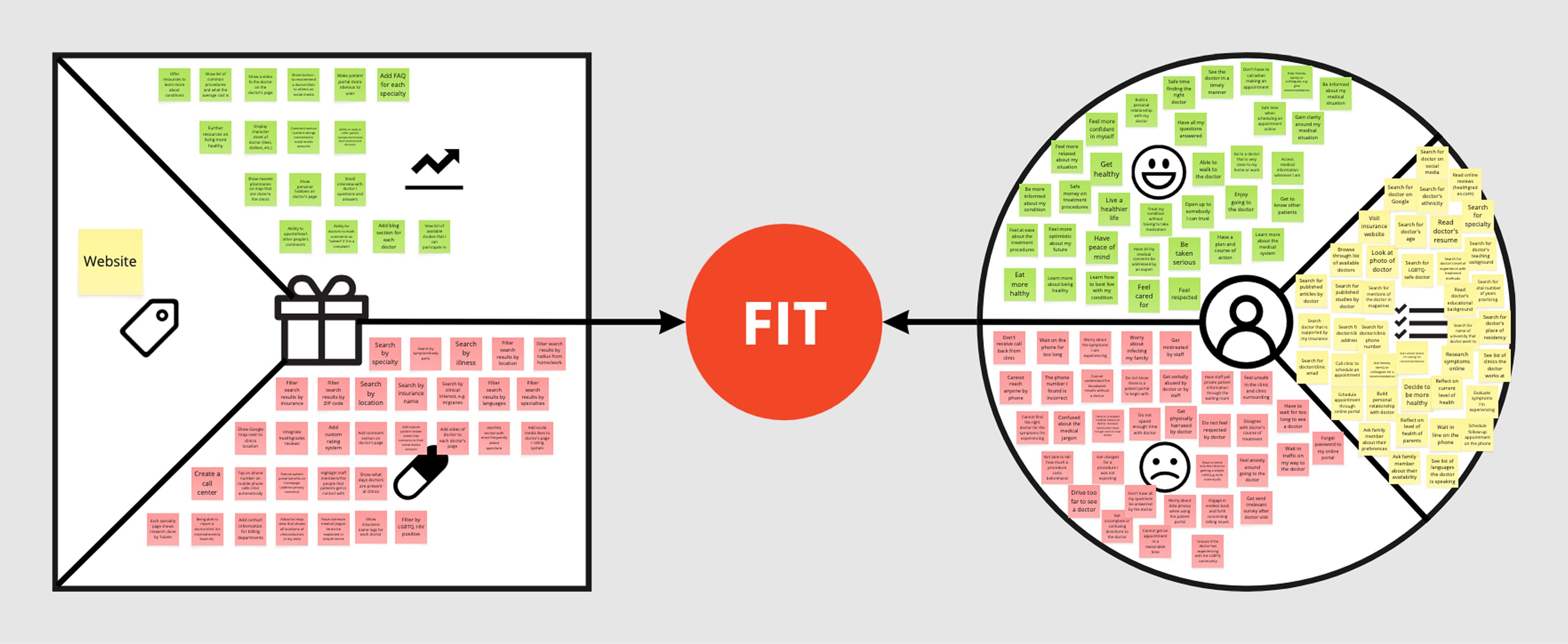
The problem was not a missing feature. It was misalignment between structure and intent. Patients ask three questions: What is wrong? Who treats it? Where can I go? The site answered none of them clearly. The solution required redesigning the system so navigation, search, profiles, and location worked together.
Among the biggest challenges were:
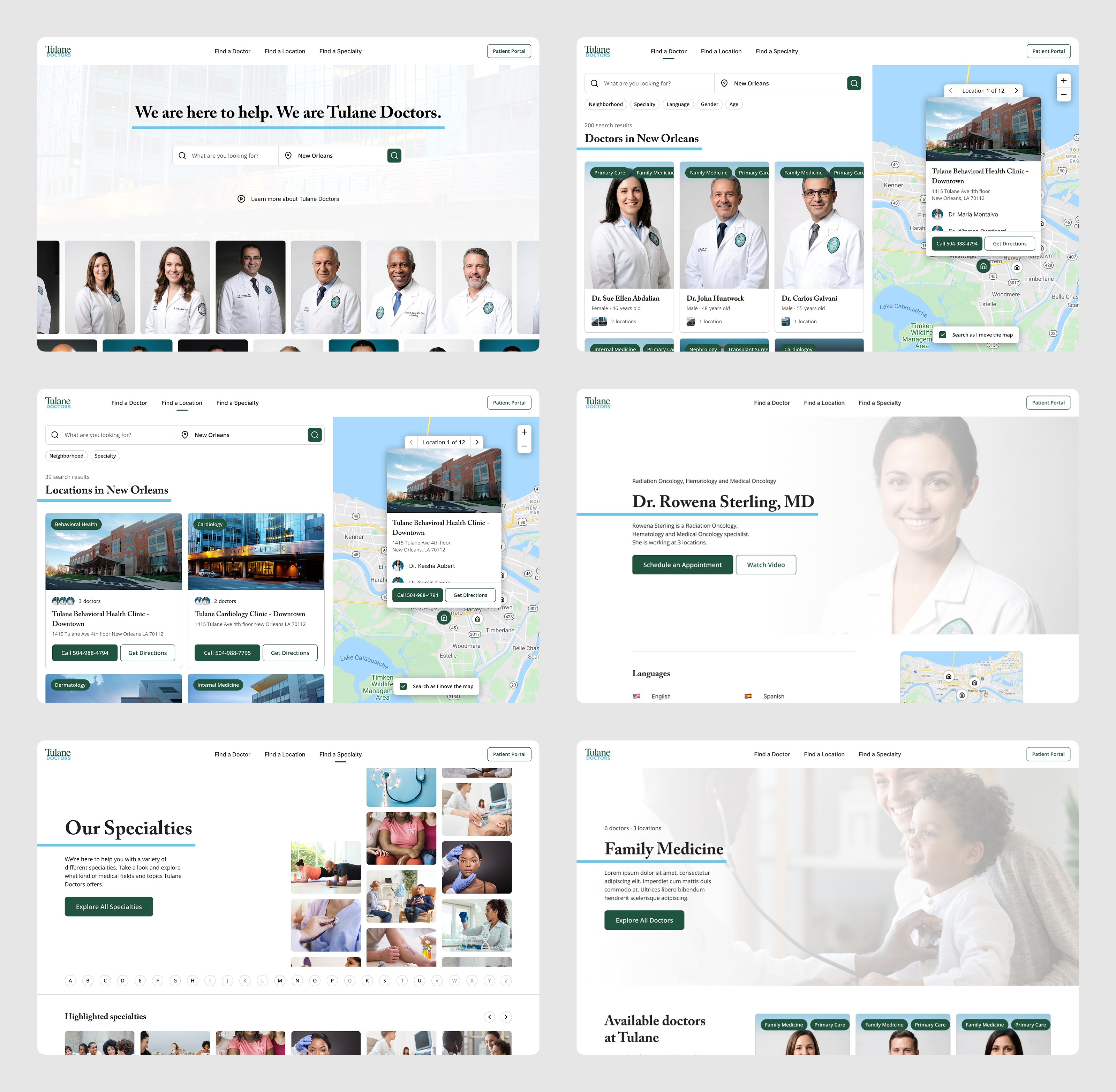
Restructure navigation. Entry points were organised by department rather than need. I redefined primary pathways around symptoms, specialties, and location, reducing dead ends and clarifying paths to care.
Design for proximity. Location strongly influenced choice. I introduced a map and results view with radius controls, allowing patients to compare physicians and clinics in one place.
Simplify search. Early testing revealed how quickly filters created friction. I prioritised common patient language and clarified filter behaviour to reduce cognitive load without limiting flexibility.
Standardise profiles. Physician pages varied widely in tone, structure, and emphasis. I defined a consistent layout balancing credentials, expertise, insurance, location, and clear contact actions. This created a scalable content model across departments.
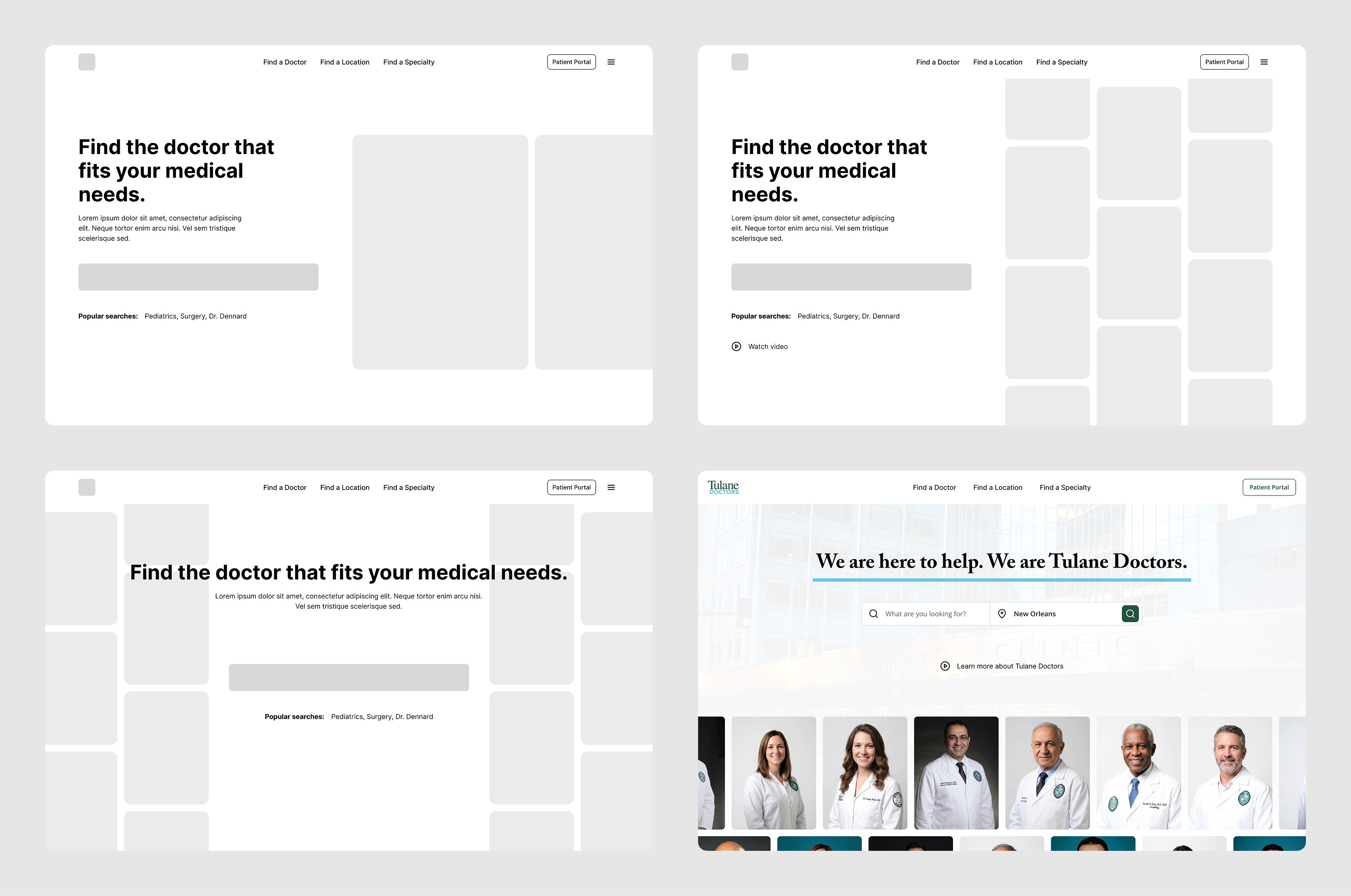
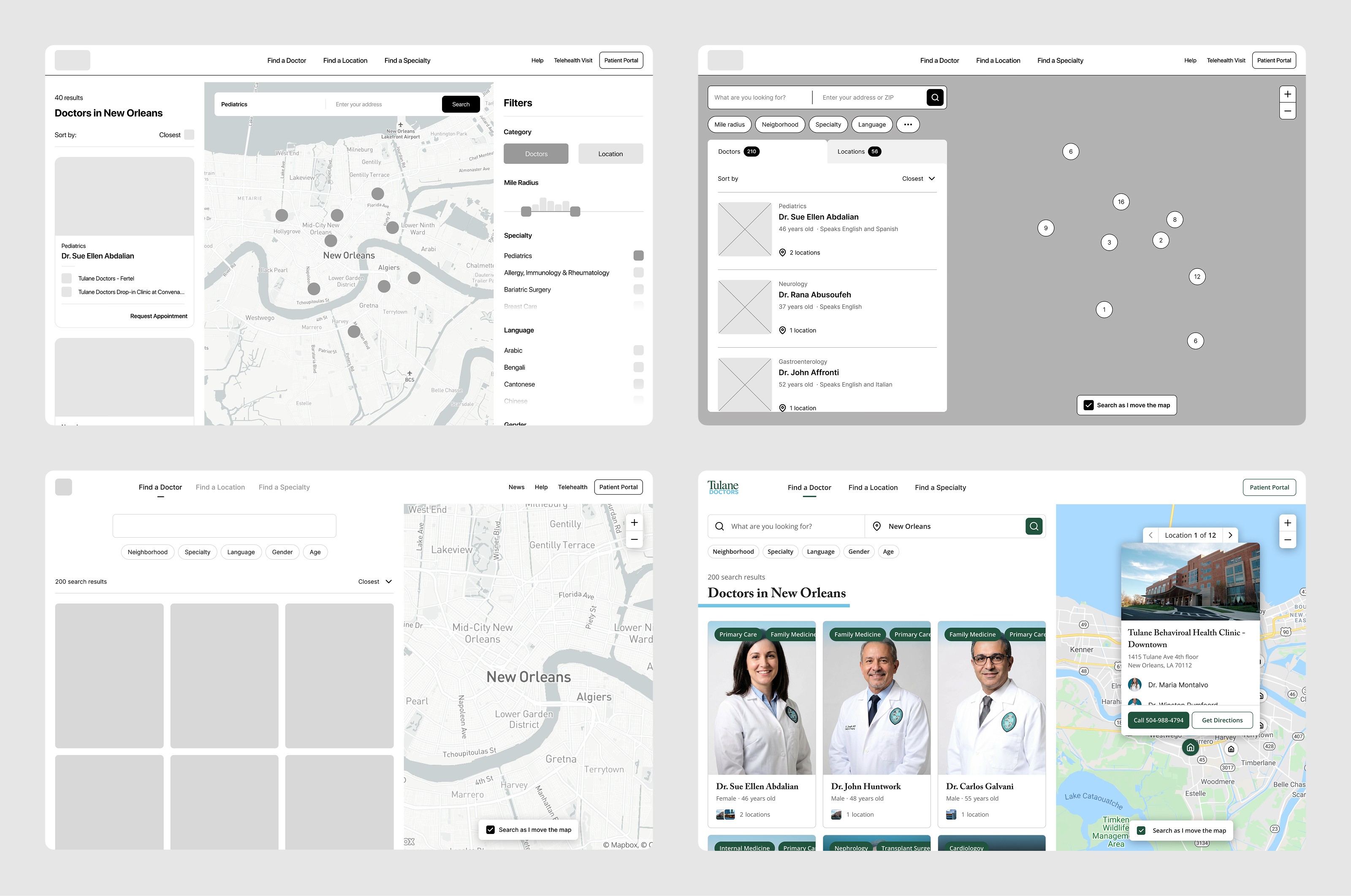
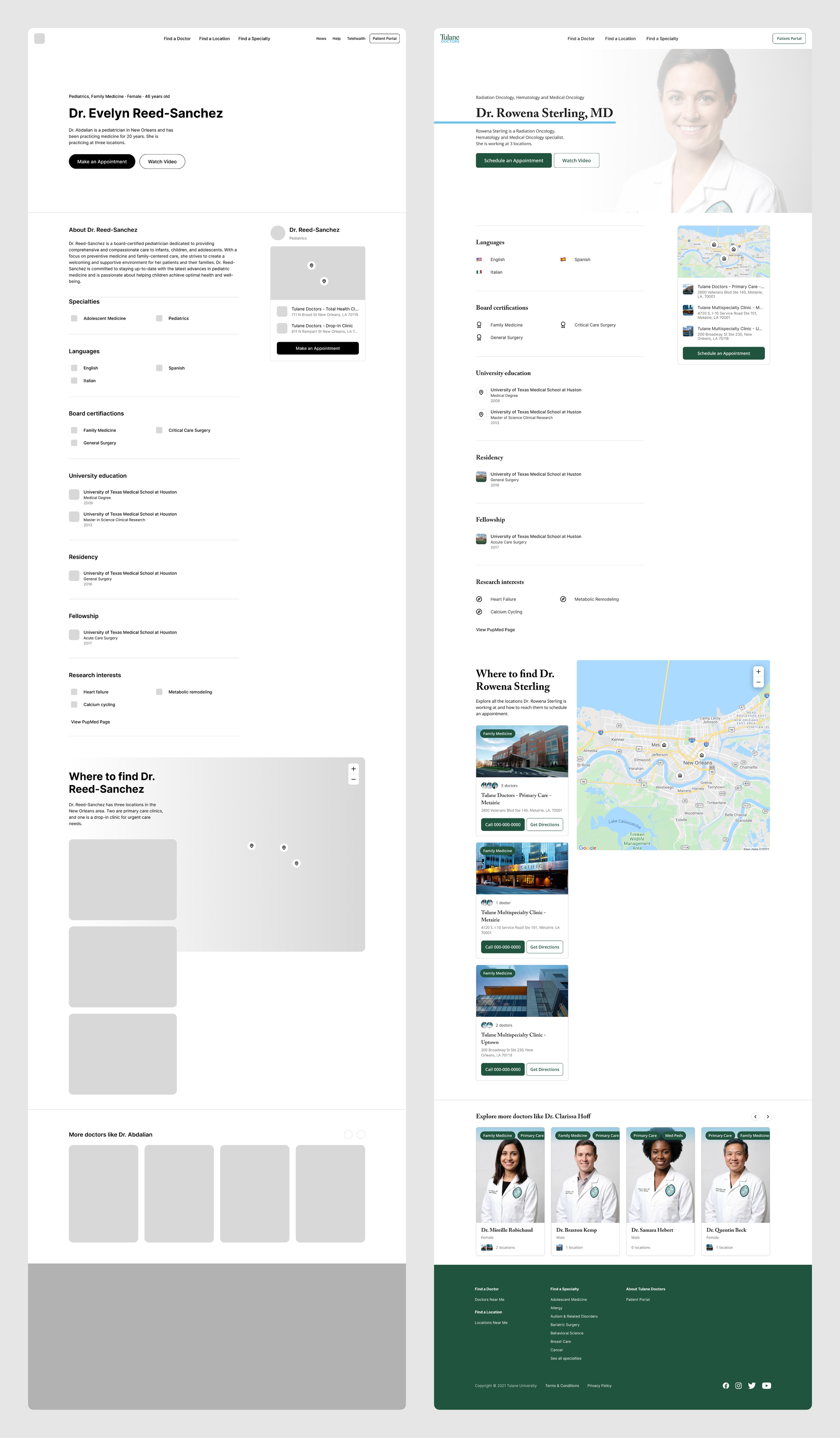
Within six months, bounce rate dropped by 80 percent and page views increased by 87 percent. Instead of exiting after a single page, patients moved between specialties, compared physicians, and explored nearby locations. Behaviour signalled more deliberate evaluation and clearer paths to care.
More importantly, the website shifted from a collection of department pages to a unified system. Standardised profiles and simplified navigation reduced fragmentation and introduced a shared framework departments could build on. The site began to function as the front door to the health system, aligned with how patients actually search for care.