UX Designer
Employee wellbeing has become a board level conversation, yet many HR teams struggle to prove its value. Research shows that only one in five HR professionals can build a convincing business case for it. With metrics spread across different tools, teams can see activity, but struggle to understand what is driving outcomes or whether wellbeing initiatives are making a difference.
This gap surfaced in YuLife’s Employer Portal analytics dashboard, which supported reporting, renewals, and investment decisions. However, by focusing on basic adoption and activity metrics, it made trends hard to interpret and outcomes difficult to explain. As a result, HR teams relied on quarterly reports and ad hoc requests, slowing decisions and placing ongoing operational strain on YuLife’s Customer Success and Data teams.
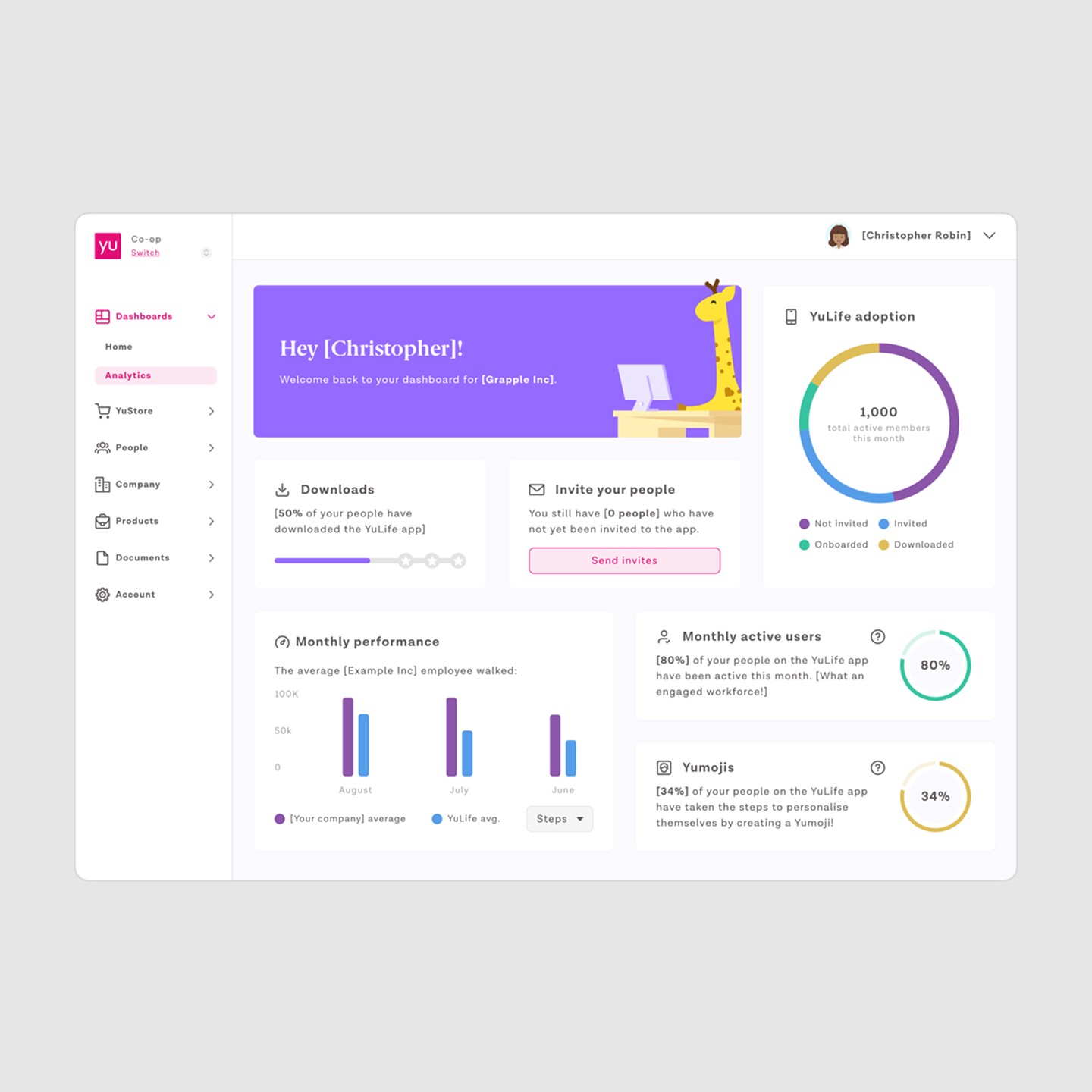
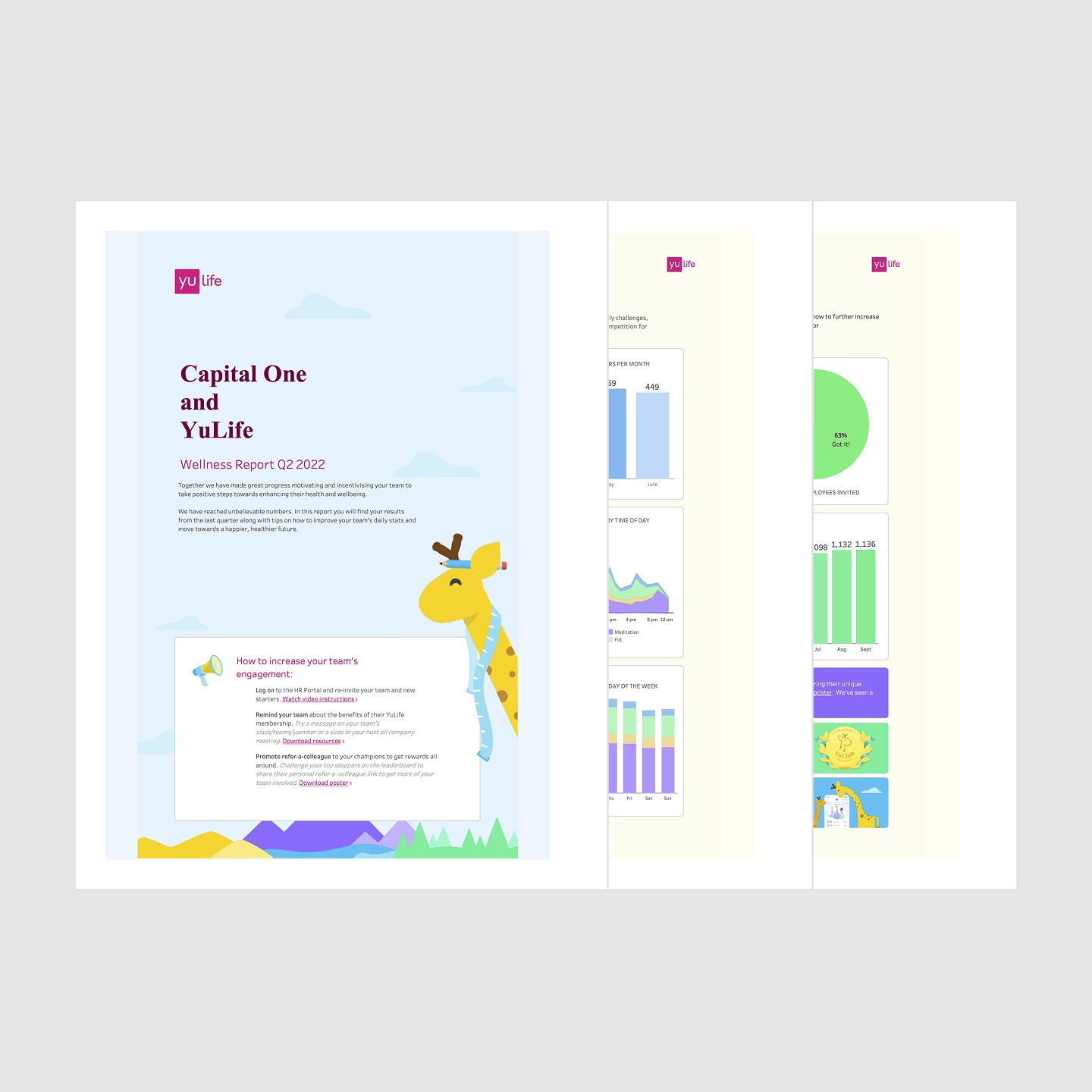
To validate the problem, I interviewed stakeholders and HR teams across YuLife and client organisations. While access to data was not the issue, confidence in interpreting and communicating it was. Inconsistent time frames, unclear metric definitions, and a lack of narrative context made trends difficult to trust.
Several principles emerged:
Prioritise clarity over density. More metrics would not solve the problem. Structure and comprehension had to come first.
Maintain shared context. Time-based comparisons needed to align across the dashboard to prevent fragmented interpretation.
Support interpretation. Data had to be framed in a way that helped HR teams explain performance to senior stakeholders.
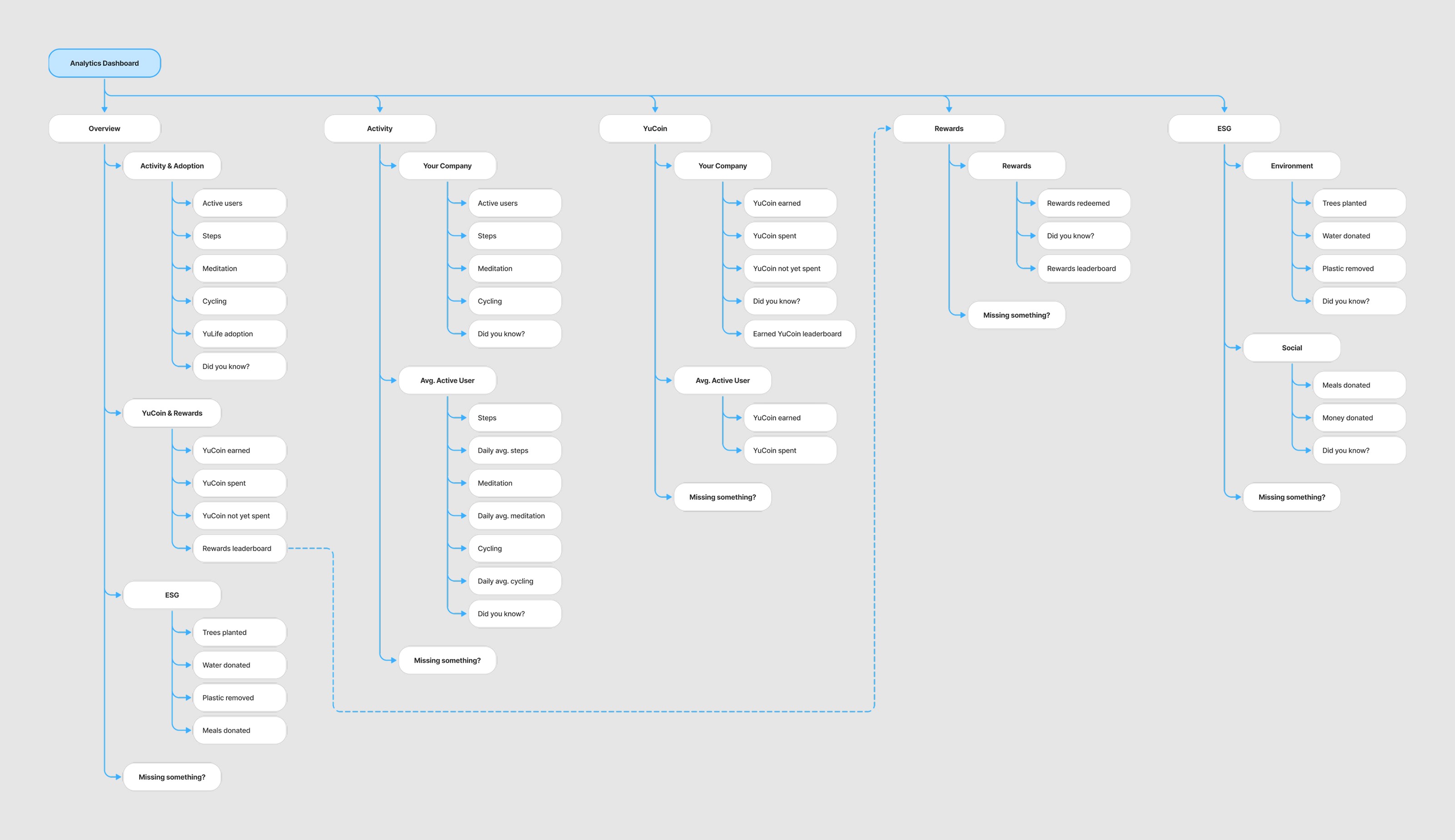
Design for scale. The structure needed to accommodate future metrics without reintroducing complexity.
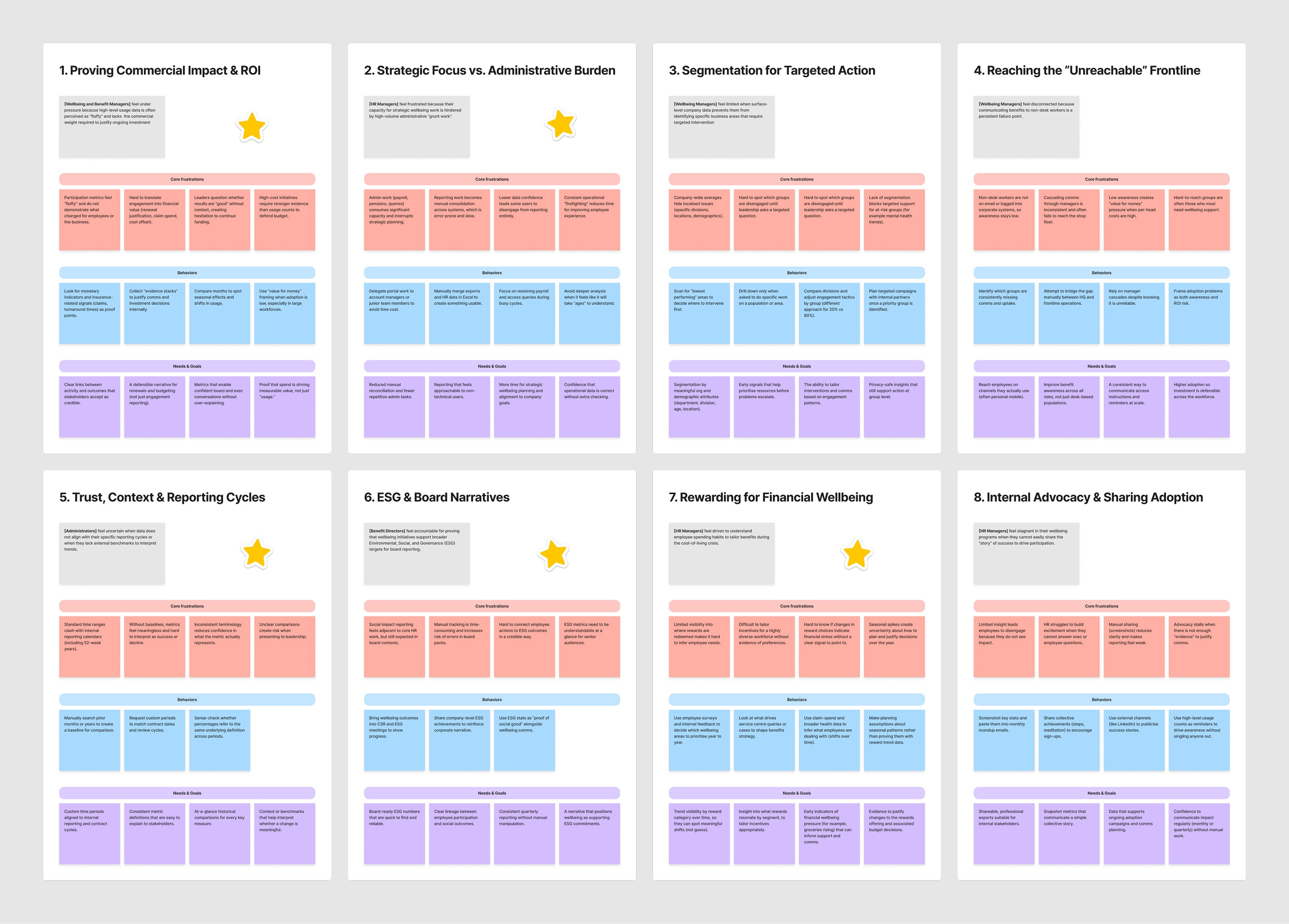
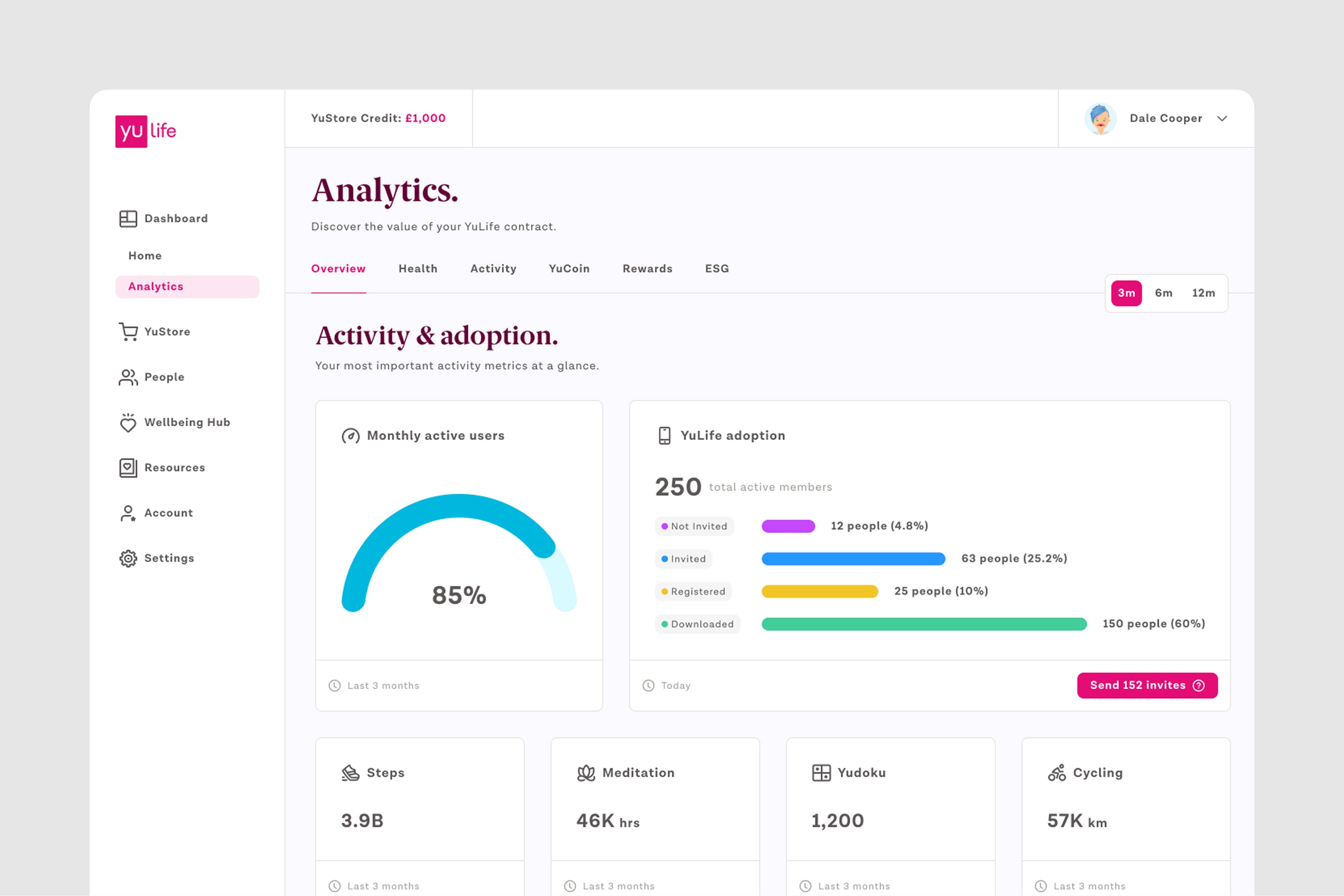
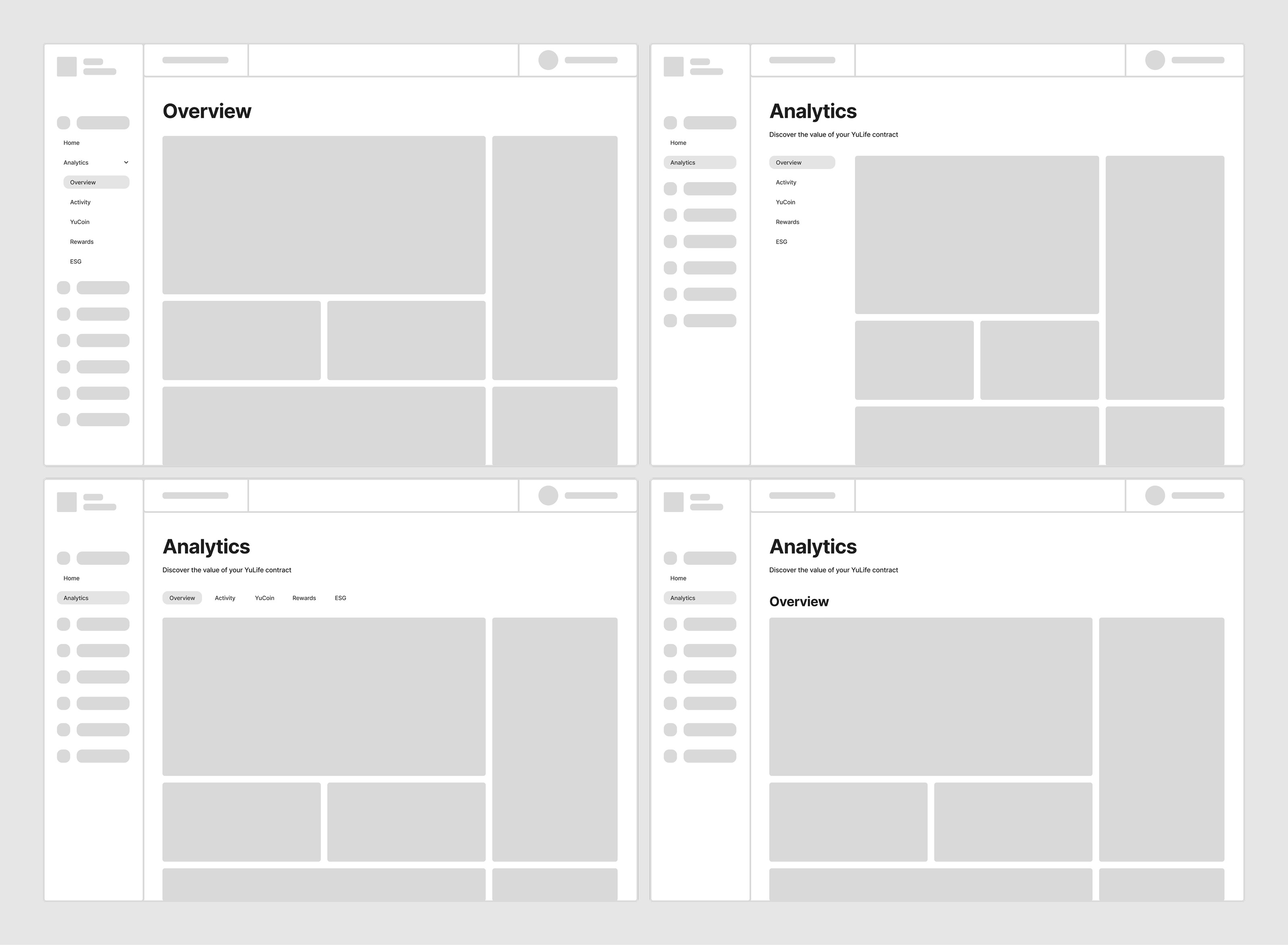
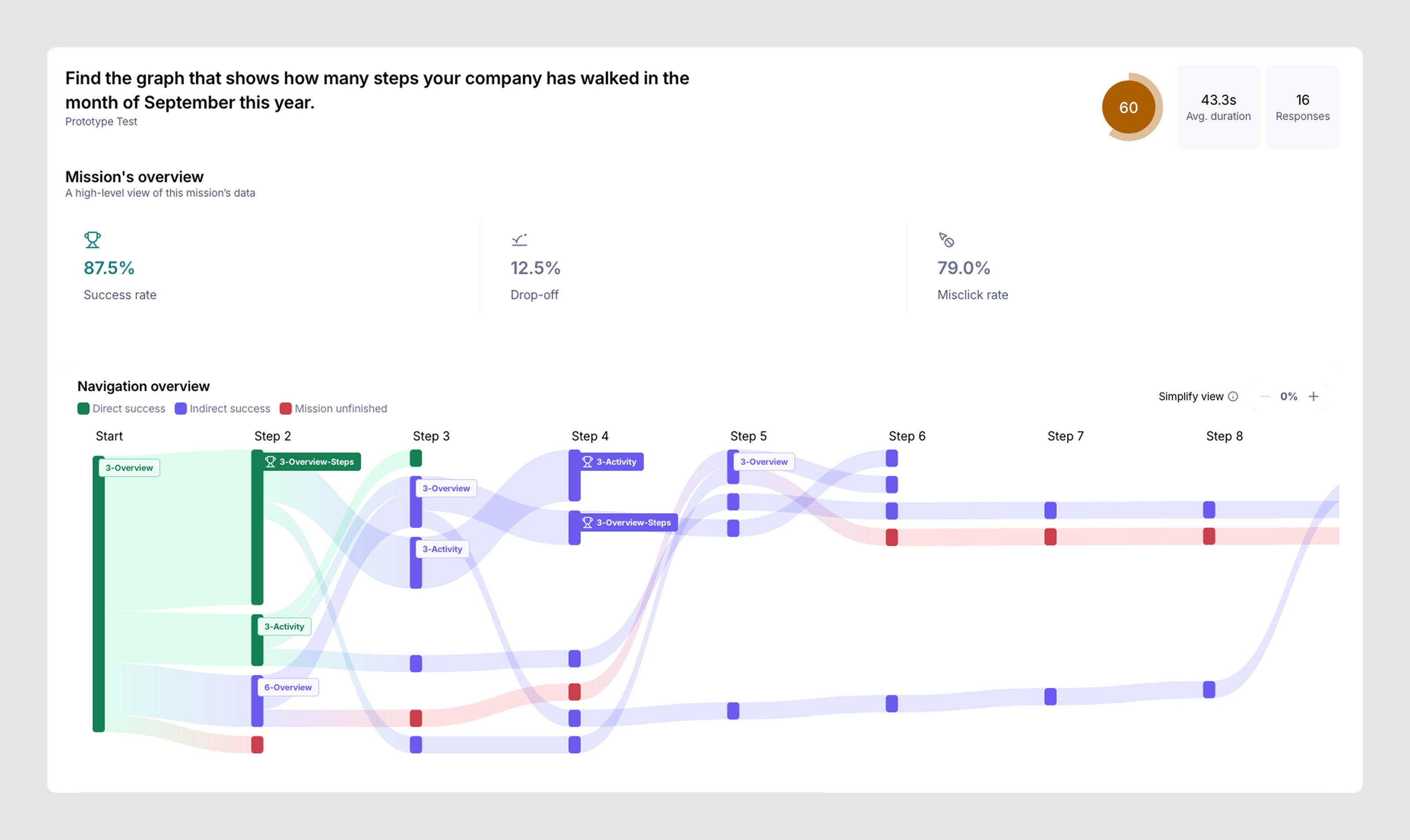
Through multiple rounds of wireframing, prototyping, and user testing, I designed the dashboard around one simple goal: make trends easier to understand and easier to explain. Design decisions focused on how information was organised, how metrics were framed in time, and how meaning was communicated alongside the data. The design process surfaced a series of interconnected challenges around structure, context, and interpretation:
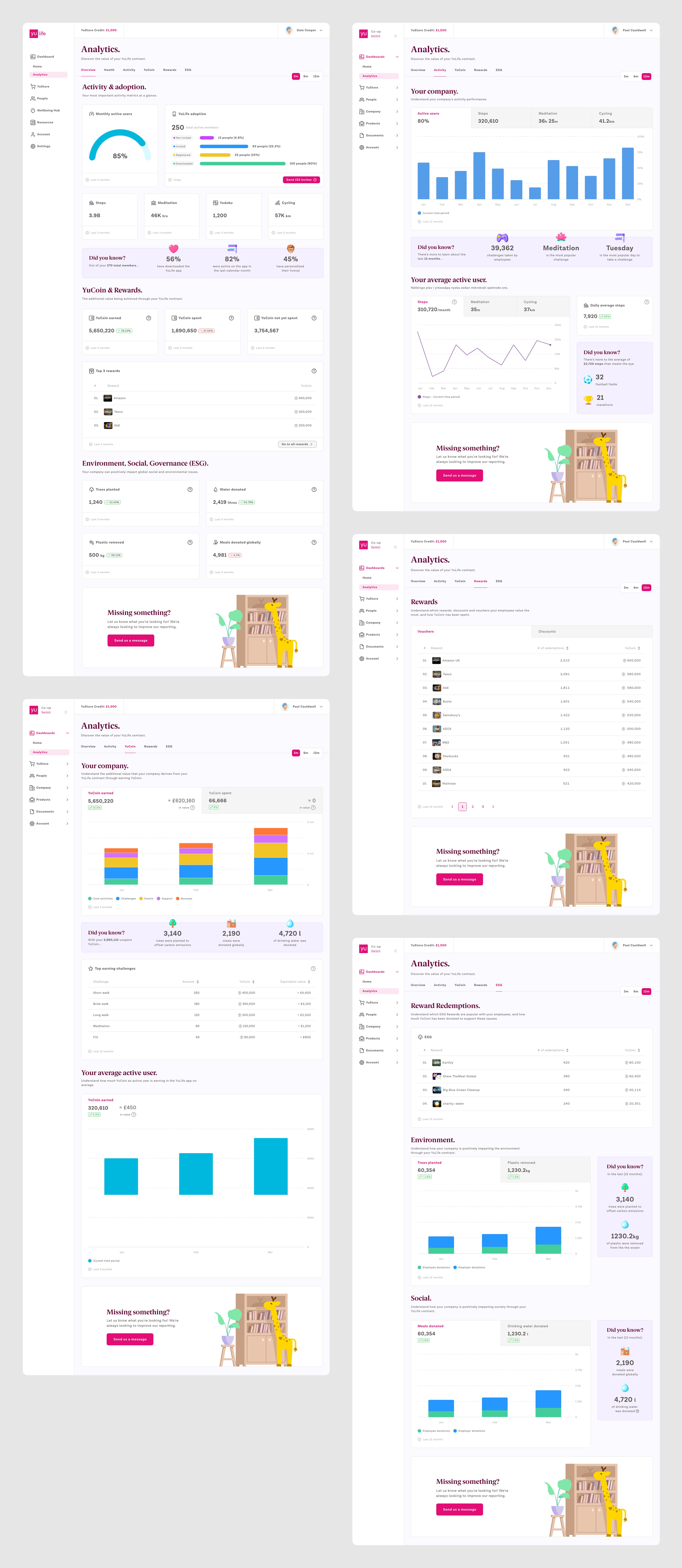
Designing for scale without losing clarity: Early designs explored a single dashboard view, but as the dataset grew, user testing revealed navigation friction and cognitive overload. This complexity undermined the original goal of clarity, so content was separated into distinct tabs to create clearer mental models and a structure that could scale over time.
Maintaining shared context when exploring trends: Time-based controls were initially applied at a component level, but this led to fragmented interpretation and made comparison across metrics difficult. Anchoring all metrics to a single global time toggle restored shared context, making trends easier to interpret and discuss in reporting conversations.
Helping users interpret and explain the data: Even with structure in place, users often paused to work out what the metrics meant and how to communicate them. This led to refinements in language, clearer definitions, improved tooltips, and the addition of “Did you know?” prompts to provide context and support explanation and storytelling.
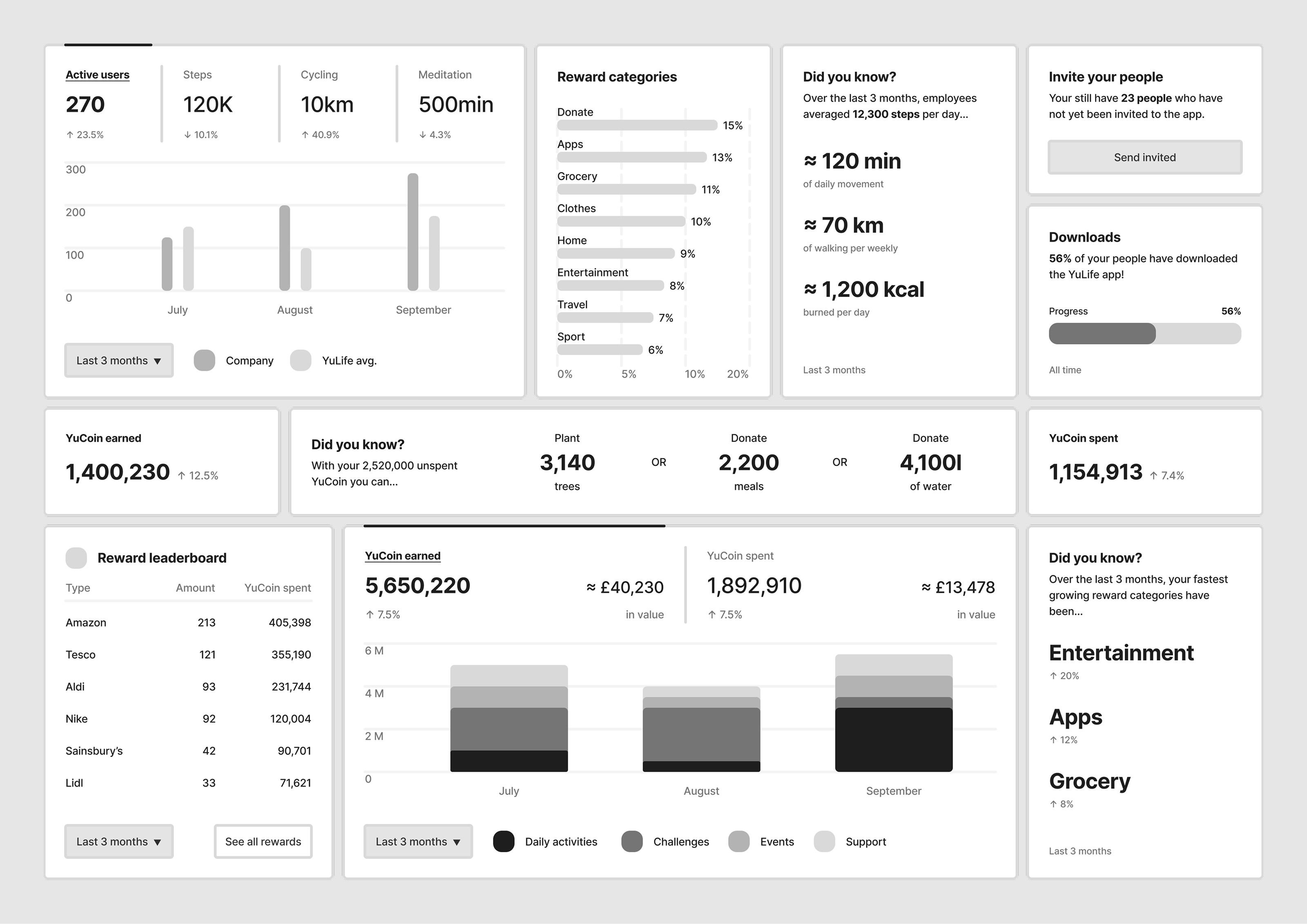

The redesigned dashboard gave HR teams a clearer way to understand and communicate wellbeing performance. Teams engaged directly with the data and assessed the impact of their initiatives without relying on static summaries or external interpretation.
For YuLife, the analytics dashboard became a core product capability, reducing dependence on quarterly reports and one-off requests. This eased pressure on Customer Success and Data teams and shifted analytics from reactive reporting to ongoing, proactive conversations.